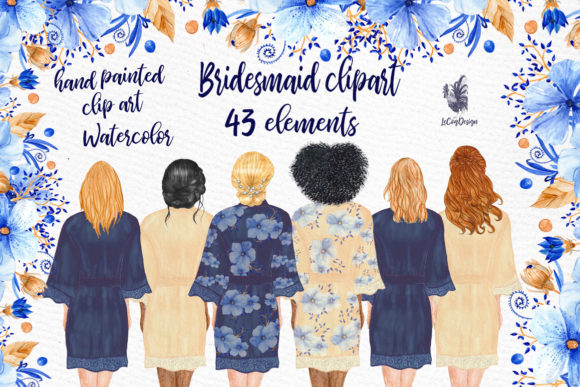
Review: Bridesmaid Clip Art Watercolor Robes
As a designer who has spent years translating digital art into tangible thread, I approach every new asset with a critical eye. When I first opened the file for Bridesmaid Clip Art Watercolor Robes, my immediate thought was about texture and translation. This is not a sharp, vector-based line drawing; it belongs to the Illustrations category, characterized by soft edges and blended hues that mimic watercolor paint. The challenge, and the beauty, lies in how this specific aesthetic survives the transition from screen to fabric.
The First Impression: Softness Meets Structure
The visual personality of Bridesmaid Clip Art Watercolor Robes is undeniably romantic and whimsical. It captures the fleeting, dreamy moment of getting ready for a wedding. For an Etsy seller or a boutique owner looking to curate a collection of bridal accessories, this design offers a distinct mood that standard clip art often lacks. The layout feels organic, avoiding the rigid symmetry that can sometimes feel sterile on custom apparel.
However, as I zoomed in to evaluate the potential for a real-world project, I noticed the delicate nature of the "watercolor" effect. In digital form, gradients are seamless. In embroidery, those gradients must be recreated using fill stitch and running stitch techniques. The success of this design hinges entirely on how well the digitizer has managed the transition between colors without creating muddy areas or excessive jump stitches.
A Real-World Scenario: The Custom Tote Bag Project
To truly test the viability of this machine embroidery design, let’s imagine a specific use case. I am preparing a set of personalized tote bags for a bachelorette party gift basket. These aren't just any bags; they need to hold weight, survive being tossed in cars, and look professional enough for the bride to keep forever.
I visualize placing the Bridesmaid Clip Art Watercolor Robes motif on a natural canvas tote. The earthy tone of the fabric would provide a perfect neutral background for the pastel hues of the robes. Here, the design shines. The soft edges of the illustration would blend beautifully with the texture of the canvas, making the stitching look intentional rather than like a mistake. The customer reaction would likely be one of delight; it feels handmade and thoughtful, elevating the perceived value of the finished product.
Contrast this with a different scenario: a tight-fitting athletic sweatshirt. On a stretchy, dark fabric, the delicate details of the watercolor effect might get lost. The stitch density required to mimic the painting style could make the area stiff, causing puckering when the wearer moves. This highlights why context matters. This design is not a universal fix-all; it is a specialized tool for specific applications.
Navigating Technical Challenges
When working with an embroidery file that relies on artistic blending, there are several technical hurdles to clear before you commit to your final garment. First, consider the hoop size. Watercolor effects often require a larger area to breathe. If you attempt to shrink this design too much to fit a small 4x4 hoop, the subtle color transitions will collapse into a single blob of thread. You risk losing the very detail that makes the Bridesmaid Clip Art Watercolor Robes unique.
Secondly, fabric choice is paramount. On textured fabrics like denim or heavy fleece, the fine details of the robe hems and sleeves may not define clearly. The thread might sink into the weave, blurring the image further. Conversely, on thin or sheer fabrics, the backside of the embroidery could show through if you do not use the correct stabilizer. A tear-away stabilizer might not offer enough support for the dense fill areas needed to create the watercolor look, potentially leading to sagging or distortion after washing.
Dark fabrics present another layer of complexity. To achieve the light, airy feel of watercolor on black cotton, you would need a white underlay or a significant amount of white thread beneath the colored stitches. This increases the thread consumption and the time required to complete the embroidery project. Always check whether the design includes a built-in underlay or if you need to add one manually in your software.
Practical Designer Notes for Success
If you are planning to integrate Bridesmaid Clip Art Watercolor Robes into your business workflow, here are my essential recommendations based on practical experience:
- Test on Scrap Fabric First: Never skip this step. Run a test on the exact fabric you intend to sell. Check for puckering, thread tension issues, and whether the watercolor effect reads clearly from three feet away.
- Verify Thread Colors: The preview on your screen will never match the physical thread perfectly. Pull your DMC or Madeira chart and compare the actual spools to the design. You may need to adjust the palette slightly to ensure the "painterly" look translates correctly.
- Inspect Small Details: Look closely at the collar lines and the folds of the robes. Are they defined by satin stitch or running stitch? Satin stitch on a large area can trap lint and oil, while running stitch might be too sparse for bold visibility.
- Mockup in Black and White: Before sending the job to production, view the design in grayscale. This helps you see if the contrast is sufficient. If the watercolor shades are too similar, they will merge into a gray mess on the fabric.
- Licensing Check: As a creative entrepreneur, always confirm the licensing terms. Can you sell the handmade product? Can you sell the digital embroidery file itself? Ensure you have the right to use these design assets for commercial purposes.
Maximizing Value and Brand Consistency
Using high-quality illustrations like Bridesmaid Clip Art Watercolor Robes can significantly boost your brand's perception. It signals to your customers that you care about aesthetics and quality. For a small shop product line, this kind of design creates a cohesive narrative. Imagine a collection of pillow covers, aprons, and nursery decor all featuring this soft, artistic style. It builds recognition and trust.
However, remember that the design is only as good as its execution. Poor stitching can ruin even the most beautiful illustration. If the stitch density is too high, the fabric becomes board-like. If it is too low, the holes in the mesh show through, ruining the illusion of paint. Finding that balance is what separates a hobbyist from a professional decorator.
Ultimately, Bridesmaid Clip Art Watercolor Robes is a versatile asset for those willing to put in the preparatory work. It excels on items where softness and romance are key—think baby embroidery for a gender-neutral nursery, holiday gifts for a bridal shower, or personalized gifts for the wedding party. By respecting the limitations of the medium and testing thoroughly, you can turn this digital illustration into a stunning, tactile reality that your customers will cherish.